
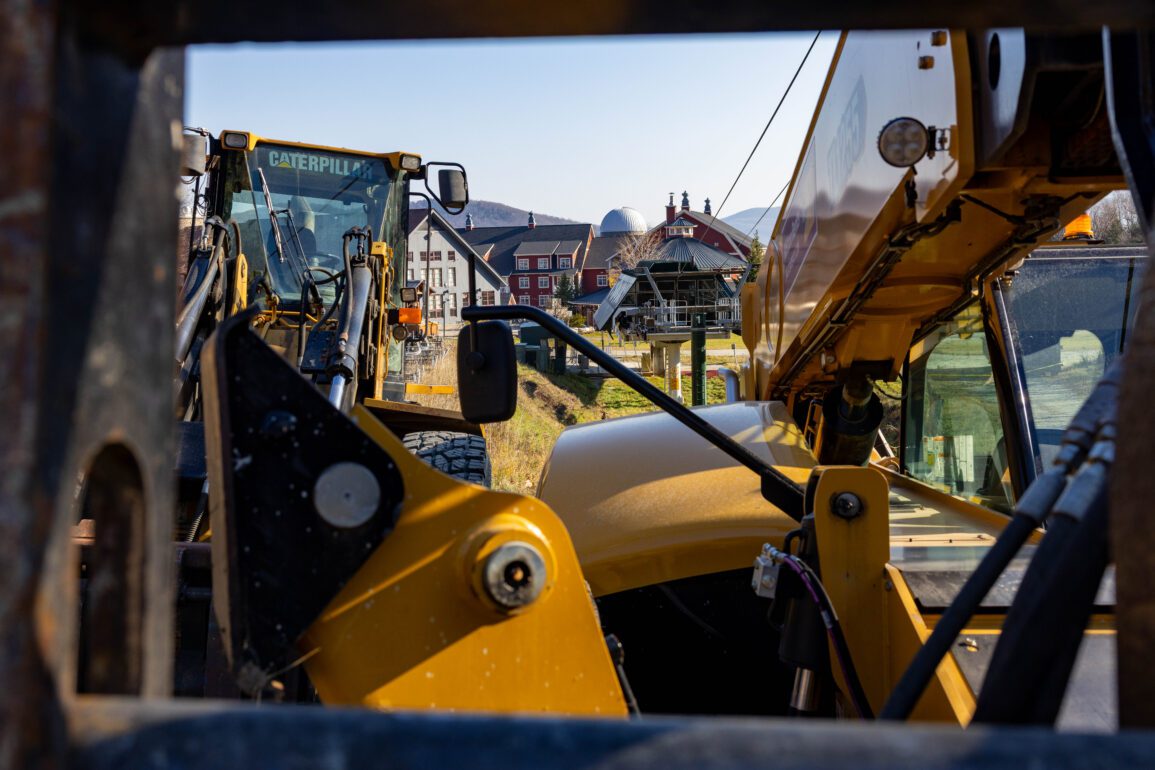
As winter fast approaches, the Mountain Ops team is hard at work ensuring all facets of the slopes are ready for reliable operations once the snow flies. One large project from this summer was the replacement of the haul rope on Super Bravo, which was recently completed. For clarification, the haul rope is the cable in which all the chairs ride on. The old one that was removed was actually the original one from when the lift was installed in 1995. As time progresses, the rope will “stretch,” with the overall length increasing. While it can be shortened, which has been done several times over the past 30 years, eventually the diameter of the rope can decrease enough that the grips that hold the chairs to it can lose their effectiveness. Haul ropes go through yearly inspections to ensure they maintain minimum safety requirements for operations, and the old rope did pass all inspections but was beginning to show signs of required replacement. While the project is one that most guests wouldn’t notice, the team here as Sugarbush saw this investment in the safety of the lift operating as needed to be done sooner than later.
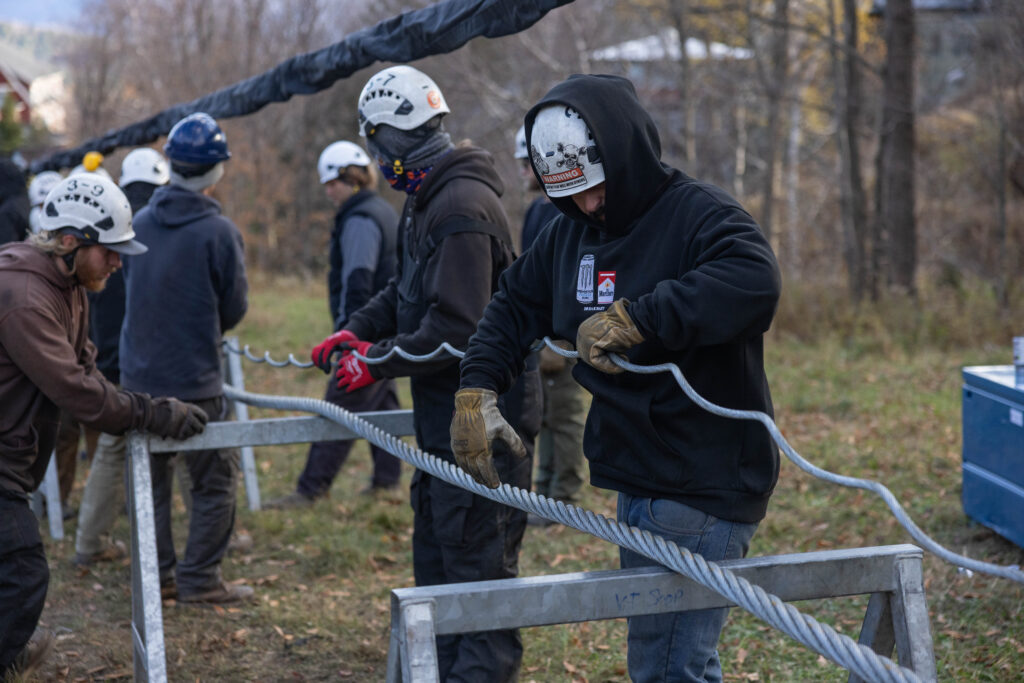
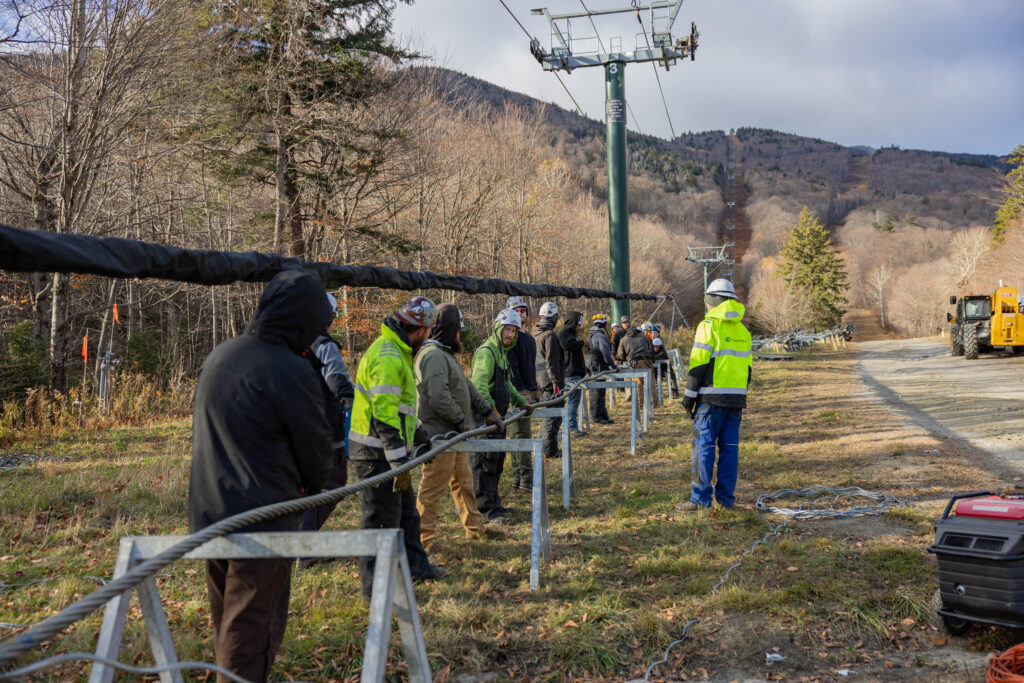
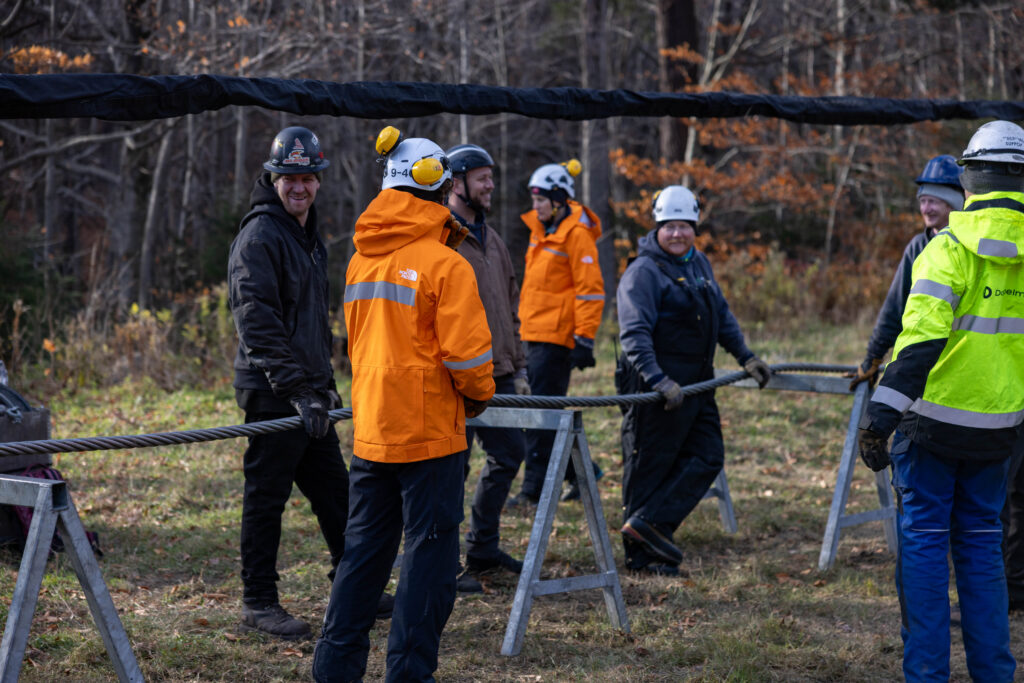
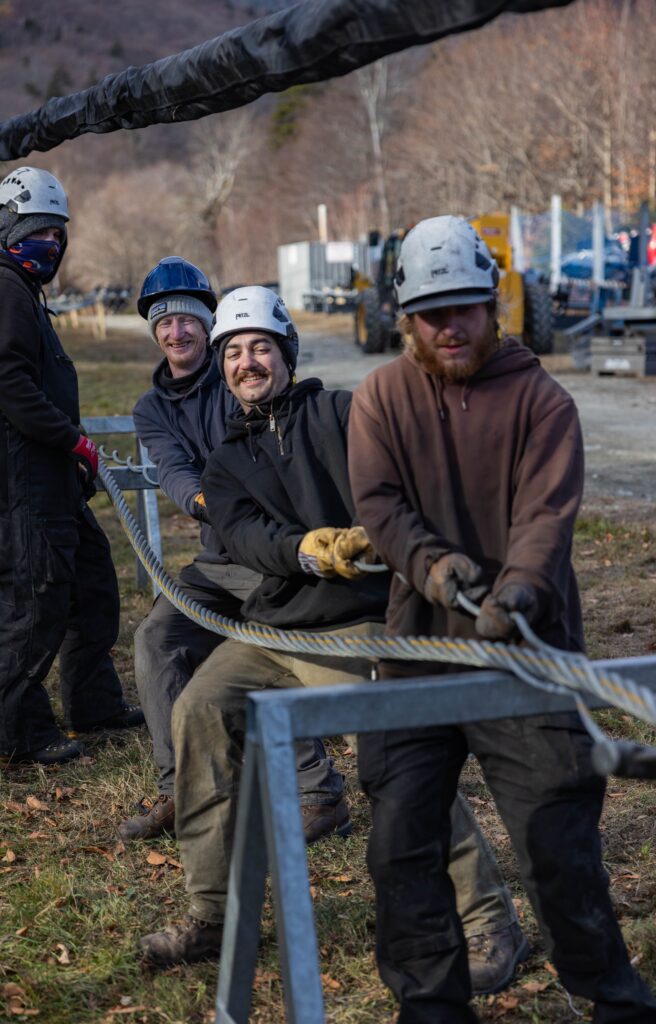
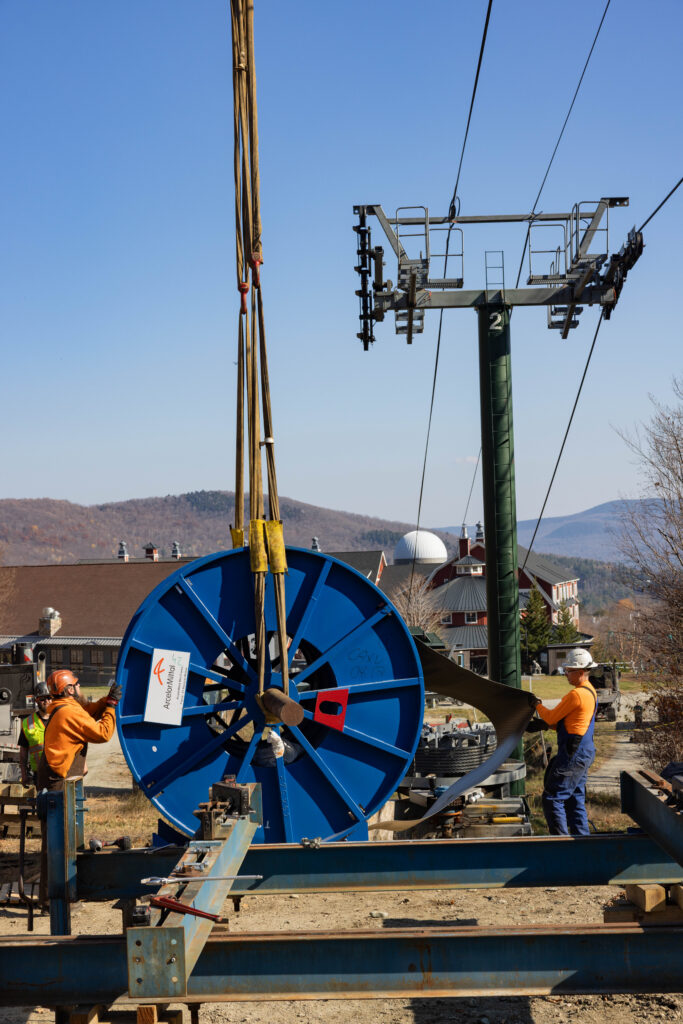
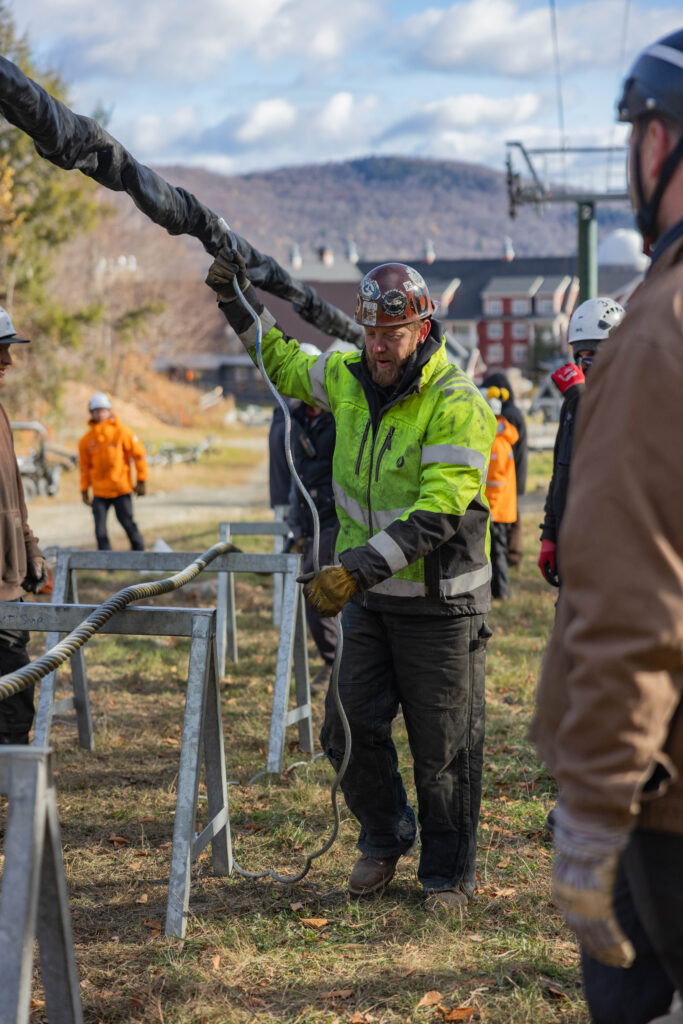
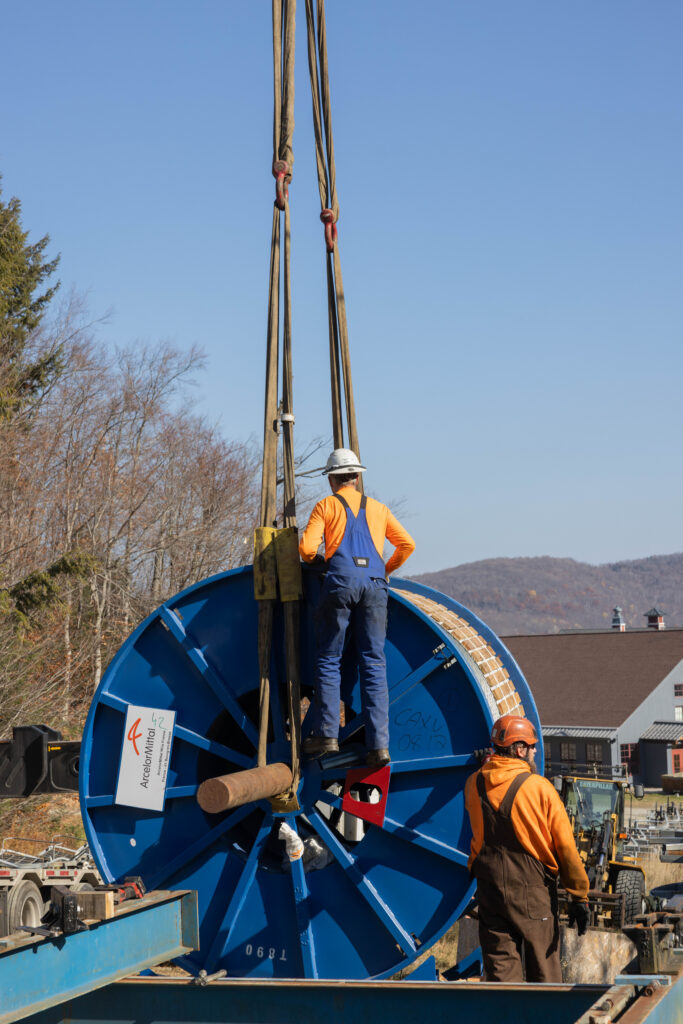
So what goes into the actual replacement? Short answer: many departments, contractors, tools, and equipment! Long answer: the process begins with the removal of all the chairs. Once the line is cleared, the rope is de-tensioned and lowered from two towers to provide working access. Specialized rigging is installed to hold the ends of the rope in place in order for a single cut to be made, turning the one long loop into a single section with two ends. Upon arrival of the new rope, this 55,000 pound spool is removed from a semi with a crane and staged in the working area. A basic connection between the old and new rope is made to guide the installation. A machine called a spooler then pulls it through all the towers and bullwheels while coiling the old rope to be cut in sections and sent to a scrap yard. Once just the new rope is on the lift, what is left behind is once again a long section with two ends. The rope is comprised of 6 woven metal strands and one plastic core. Sections of those strands are unwoven at specific lengths and then rewoven into the other end, forming what is known as a splice. Once completed, the rope is placed back on the towers, chairs are reinstalled, and we are ready to rock!
Many thanks go out to all the people involved in this project. While lift maintenance performed most of the work, team members from vehicle maintenance, trail crew, health and safety, lift operations, and snowmaking all stepped up to lend a hand. Outside vendors including the crane company, splicing specialist, and Doppelmayr (the lift manufacturer) all provided critical support as well. With ski season just a few short weeks away, I personally cannot wait to take some laps on Bravo and be proud of the work accomplished to ensure the safety of our main people mover at Lincoln Peak!